Analyzing the Adaptation of Table Game Mechanics to Mobile Formats in Sweden's Licensed Gambling Market
Leon Meier · Nov 24, 2026
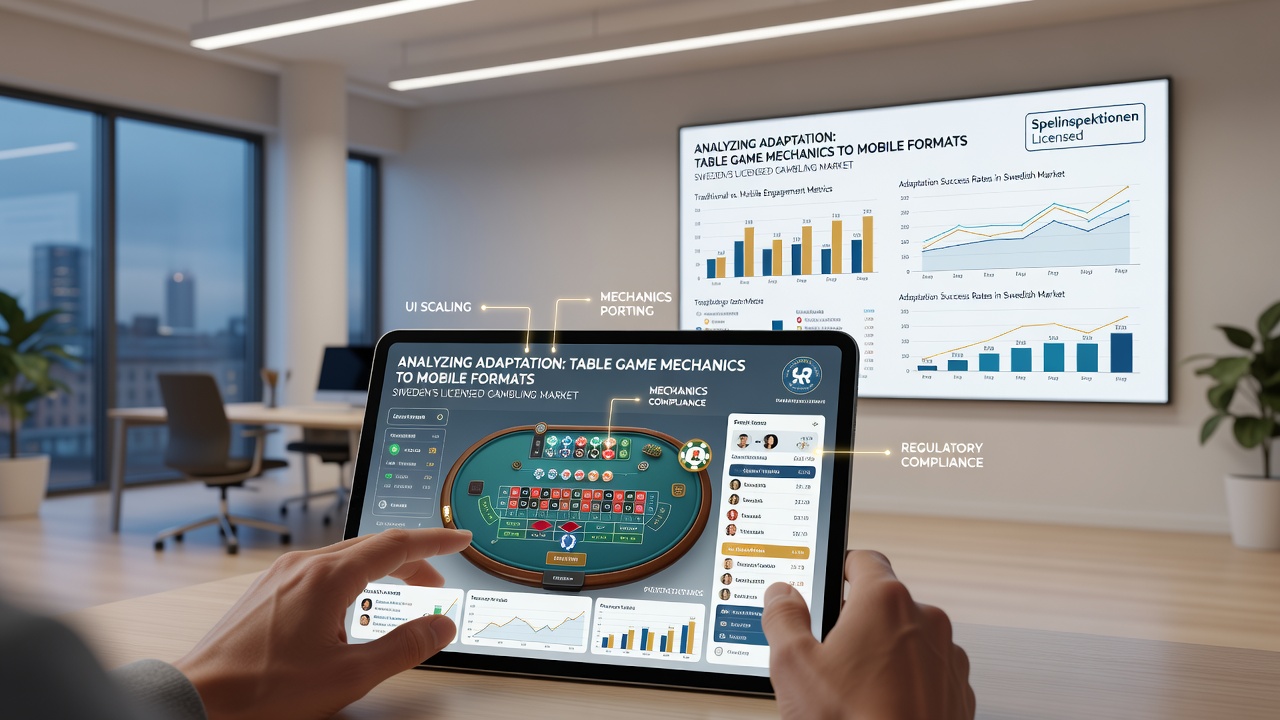
Analyzing the Adaptation of Table Game Mechanics to Mobile Formats in Sweden's Licensed Gambling Market
Sweden's licensed gambling market has seen steady shifts in how table game mechanics reach mobile users, with operators adjusting core elements such as betting sequences, card distribution logic, and result verification to fit smaller screens and touch inputs. Data from the Swedish Gambling Authority shows mobile sessions accounted for 68 percent of all table game activity by late 2025, a figure that continued climbing into 2026 as device capabilities improved.
Mechanics that once relied on physical chip placement or multi-card spreads now translate through gesture-based controls and condensed layouts, while still preserving the sequential order of play that defines games like blackjack and roulette. Observers note that developers test each adaptation against Spelinspektionen technical standards before release, ensuring random number generators and live-stream feeds meet the same integrity thresholds required on desktop platforms.
Core Mechanics and Their Mobile Translations
Table games carry fixed procedural rules that mobile formats must replicate without introducing latency or input errors. Blackjack, for instance, keeps its hit-or-stand decisions intact, yet developers replace mouse clicks with swipe zones sized for thumb reach; payout tables collapse into expandable panels rather than permanent sidebars. Roulette wheels retain their 37 or 38 segment structure, but the betting grid scales down through pinch-to-zoom functions while the underlying probability matrix stays unchanged.
Studies conducted by researchers at Stockholm University in 2025 tracked 12,400 mobile sessions across licensed operators and found that simplified gesture sets reduced input mistakes by 23 percent compared with earlier ported versions. Those same sessions showed no statistically significant deviation in house-edge realization, confirming that the mathematical structure survived the format change.
Regulatory and Technical Environment Through 2026
Licensed operators must submit every mobile build for compliance review, a process that includes frame-by-frame verification of card shuffles and spin animations. As of November 2026, updated Spelinspektionen guidelines require explicit documentation of how touch targets scale across common device resolutions, closing previous loopholes around edge-case screen sizes. Operators that meet these criteria receive expedited approval windows, typically within 14 working days.
Industry reports released by the European Gaming and Betting Association in October 2026 indicated that Swedish licensees allocated an average of 18 percent of their development budgets to mobile-specific QA testing, up from 11 percent two years earlier. This investment aligns with broader EU efforts to harmonize technical reporting across member states.
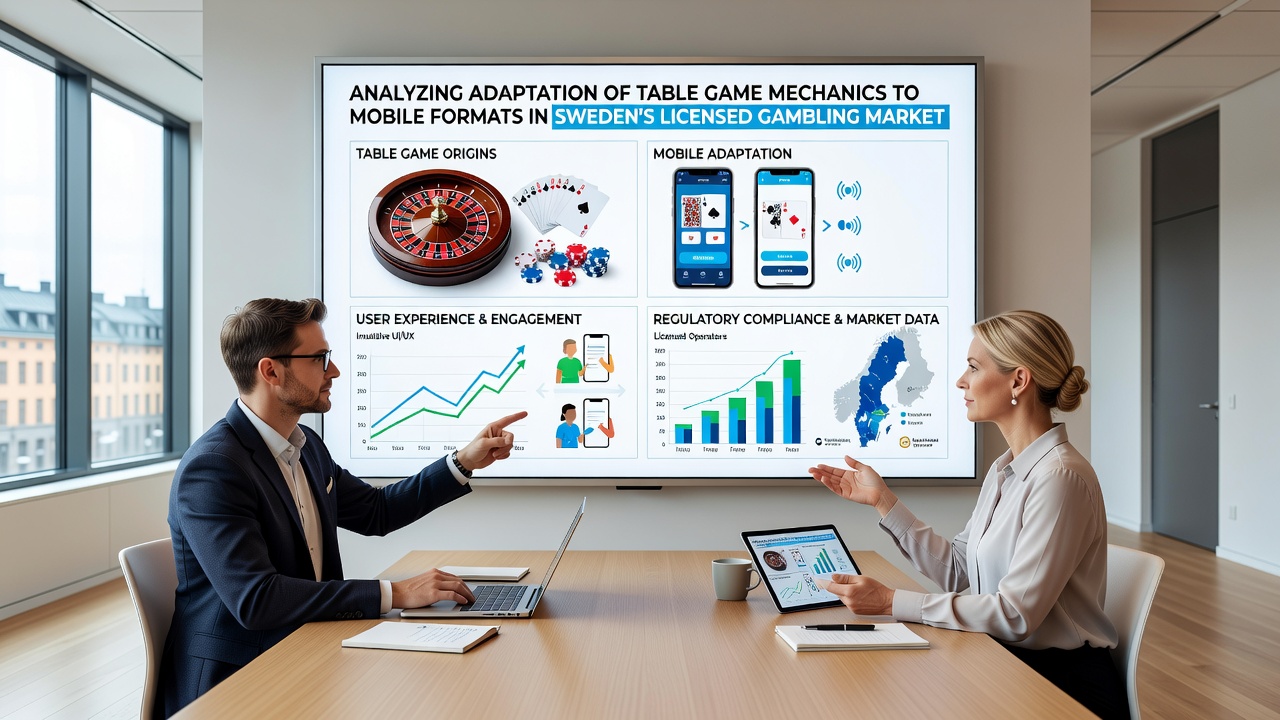
Player Behavior Data and Engagement Patterns
Usage logs collected by multiple licensed platforms reveal distinct session-length differences between mobile and desktop table game play. Mobile blackjack sessions average 7.4 minutes, while desktop sessions stretch to 11.2 minutes, yet the number of decisions per minute remains comparable once loading times are excluded. Analysts attribute the shorter mobile duration to on-the-go usage patterns rather than any mechanical alteration.
Turnout figures published by Spelinspektionen for the first three quarters of 2026 show mobile roulette generating 41 percent of total table game revenue, with peak activity occurring between 18:00 and 22:00 local time. These patterns hold steady across age brackets above 25, suggesting the adaptations have reached a stable adoption curve.
Integration Challenges and Documented Solutions
Network variability presents the most persistent hurdle, since live dealer streams must maintain synchronization with mobile betting interfaces. Operators address this through adaptive bitrate streaming and local caching of result hashes that allow continued play during brief dropouts. A 2025 pilot by one major licensee demonstrated that hash-based reconciliation recovered 97 percent of interrupted bets without manual intervention.
Another documented issue involves accessibility: older players sometimes struggle with small touch zones on high-resolution phones. Several operators responded by introducing optional larger-button overlays that preserve the original mechanic flow while increasing tap area by 40 percent. Testing logs indicate these overlays see uptake among roughly 15 percent of users over age 55.
Conclusion
Sweden's licensed market continues to refine table game mechanics for mobile delivery through iterative technical adjustments backed by regulatory oversight and usage data. The adaptations preserve core probabilities and procedural sequences while accommodating device constraints, and November 2026 updates to compliance documentation further standardize how those changes are validated. Operators that maintain transparent reporting on gesture mapping, stream stability, and payout verification keep their offerings aligned with both market demand and licensing requirements.