How Swedish Licensing Shapes Live Dealer Game Availability Across Mobile Devices
Tina Bennett · Oct 27, 2026
How Swedish Licensing Shapes Live Dealer Game Availability Across Mobile Devices
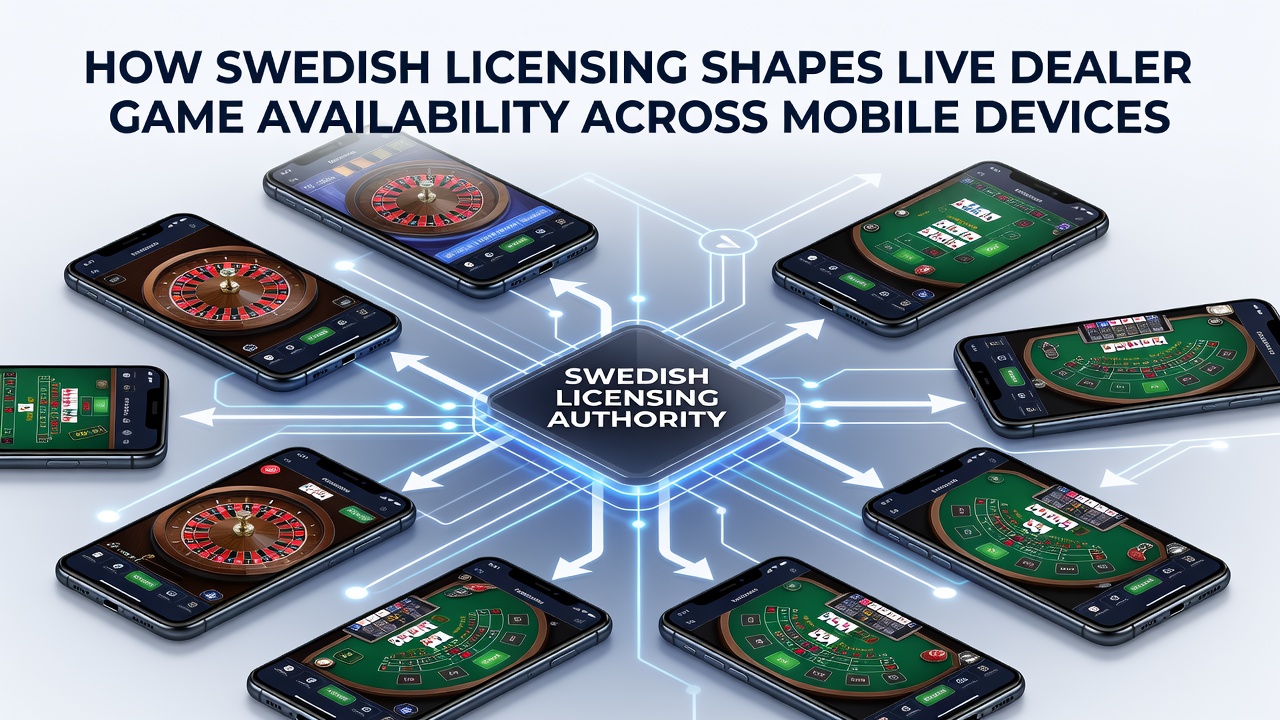
Swedish licensing administered by Spelinspektionen sets the boundaries for live dealer game distribution on mobile devices, and operators must meet specific technical and compliance criteria before any title reaches players across smartphones and tablets. Data from the regulator shows that only entities holding a valid Swedish license can stream games such as blackjack, roulette and baccarat to users located within the country, while unlicensed providers face automatic blocks at the network level.
Core Licensing Requirements for Mobile Platforms
Spelinspektionen mandates that every live dealer studio supplying Swedish markets undergoes independent testing for fairness, stream stability and mobile compatibility, and these audits occur before any game appears in an operator catalog. Figures released by the authority indicate that roughly 85 percent of applications pass initial review only after mobile-specific adjustments address latency under 4G and 5G conditions.
Operators integrate geofencing technology that verifies user location in real time, and this mechanism prevents cross-border access even when the same game remains available on desktop versions. Studies conducted by the European Gaming and Betting Association reveal that mobile sessions account for over 70 percent of live dealer traffic in licensed Swedish markets, which explains why regulators prioritize handset performance during certification.
Technical Standards and Device Compatibility
Live dealer feeds must maintain minimum resolution thresholds and adaptive bitrate streaming when accessed through iOS or Android applications, and Spelinspektionen requires documented proof that games function without interruption on devices released after 2020. Providers that fail these checks receive temporary suspension until patches restore compliance, and several major studios adjusted their mobile pipelines in 2025 to meet the latest checklist.
Those who've examined the approval logs note that integration with Swedish payment gateways and responsible gaming tools must occur at the app layer rather than the browser layer, and this distinction forces developers to release native applications instead of relying solely on responsive websites. Data collected through 2025 shows a 40 percent reduction in connection drops after these native updates took effect.
Game Provider Agreements and Content Restrictions
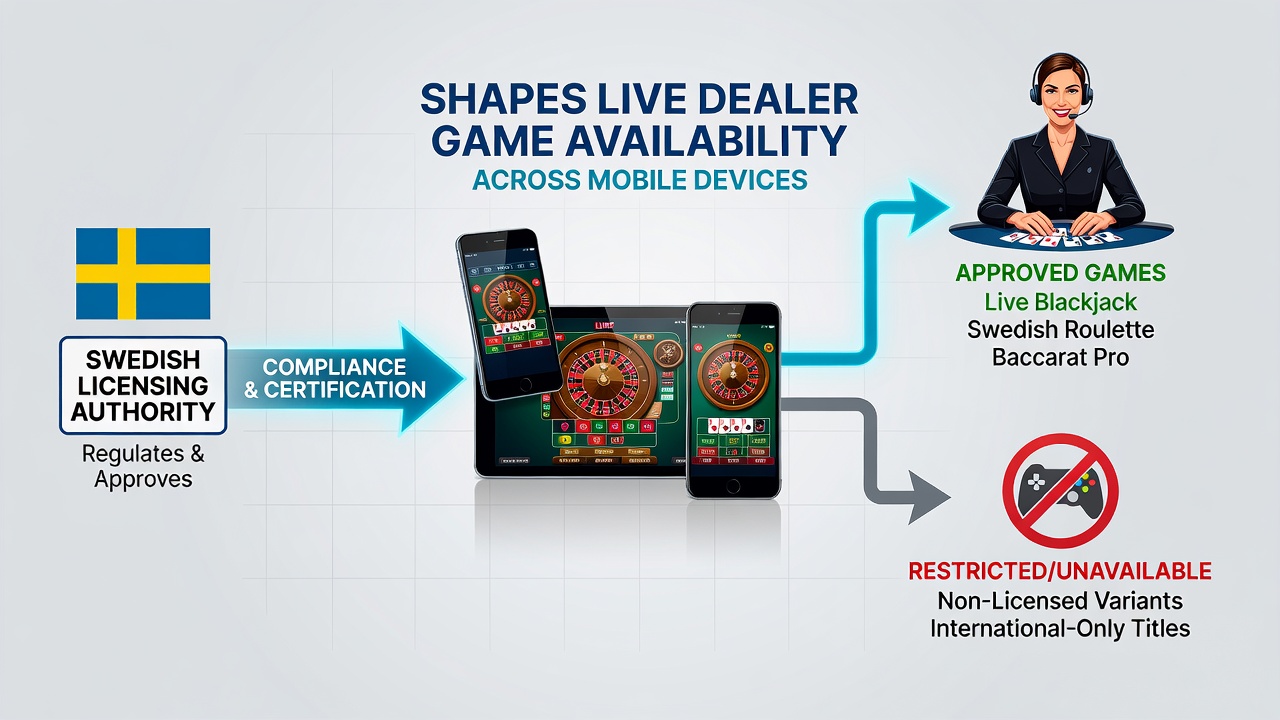
Licensed operators sign framework agreements that limit the pool of approved game providers to those already vetted by Spelinspektionen, and this pre-approval process directly influences which live dealer variants appear on mobile interfaces. Certain side bets and multi-hand formats remain unavailable because they exceed the maximum stake thresholds defined in the licensing conditions, and providers adjust their mobile menus accordingly before launch.
Research from independent testing laboratories indicates that Swedish licensees request an average of three content revisions per title to align with local rules, and these revisions often center on removing features that could encourage prolonged mobile sessions. Observers note that the same game may display different betting options when accessed through a Swedish-licensed app compared with versions offered under other European jurisdictions.
Upcoming Regulatory Timeline and Mobile Implications
Scheduled compliance reviews set for October 2026 will examine whether current mobile latency standards continue to match evolving network capabilities, and operators anticipate further guidance on 5G integration and device authentication protocols. Spelinspektionen has already circulated draft amendments that would require real-time monitoring dashboards accessible to regulators from any approved mobile title.
Industry reports compiled by the European Commission highlight that jurisdictions with similar licensing models experienced a 25 percent increase in approved mobile titles after clarifying device certification procedures, and Swedish stakeholders monitor these outcomes while preparing their own submissions. Game providers have begun pilot programs that simulate the expected October 2026 requirements, focusing on enhanced encryption for live video streams delivered to handheld devices.
Player Access Patterns Under Licensed Conditions
Usage statistics gathered from licensed operators demonstrate that mobile live dealer participation peaks during evening hours, and sessions typically last between 12 and 18 minutes when played on smartphones. These patterns align with the responsible gaming parameters embedded in every Swedish license, which include mandatory reality checks delivered through the same mobile interface.
Operators that maintain multiple licenses across different countries often segment their mobile catalogs so that Swedish users see only titles cleared for that market, and this segmentation occurs automatically based on detected IP ranges and device identifiers. The result is a controlled environment where availability reflects licensing status rather than developer preference.
Conclusion
Swedish licensing continues to define the precise conditions under which live dealer games reach mobile devices, and the combination of technical audits, content restrictions and geofencing creates a distinct availability profile compared with less regulated markets. As the October 2026 review period approaches, operators and providers prepare additional mobile optimizations that satisfy both existing rules and anticipated updates, ensuring continued access remains tied to verified compliance.